

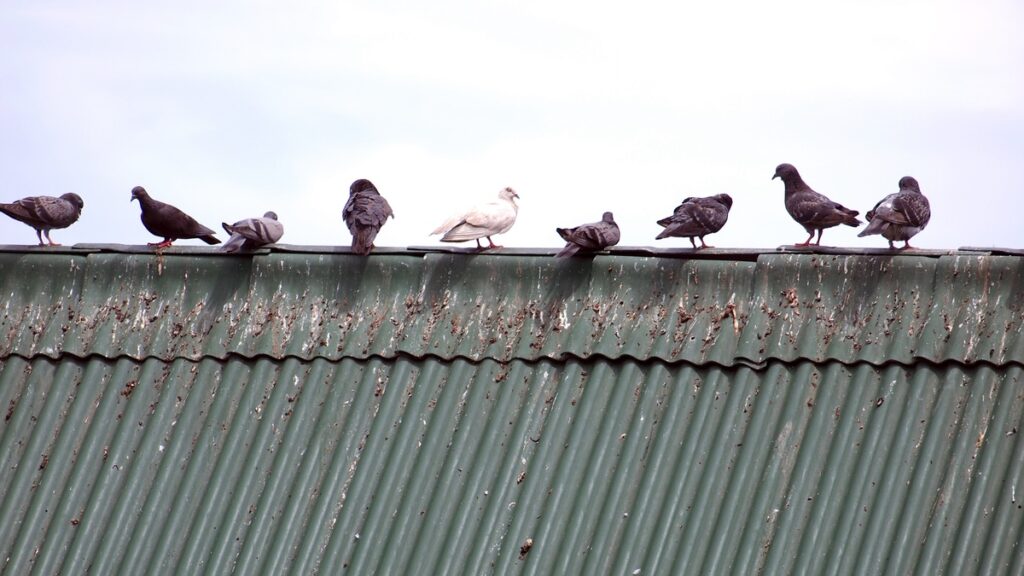
Pigeon droppings on your property might seem like a harmless nuisance, but they pose serious risks. These droppings can carry up to 60 different diseases that threaten both your health and home.
This guide will explain the health risks of pigeon droppings around your home and how to handle infestations safely. Keep reading to protect your family and property.
Health Risks Associated with Pigeon Droppings
Pigeon droppings aren’t just messy; they can pose serious health risks. Inhaling particles from dried feces may trigger dangerous infections.
Diseases caused by pigeon droppings
Droppings from pigeons can harbor pathogens that cause serious health risks. Histoplasmosis, a fungal infection found in dried droppings, affects the lungs when spores are inhaled.
Psittacosis, caused by bacteria in contaminated feces, leads to flu-like symptoms and severe respiratory issues if untreated.
Salmonella is another concern; it spreads from bird poop to food or water sources. Contaminated soil near nests poses added dangers as airborne particles may trigger infections like cryptococcosis or worsen conditions for those with compromised immune systems.
“Even small amounts of pigeon poop can carry big risks,” experts often warn homeowners about hidden hazards.
Symptoms of exposure to pigeon droppings
Exposure to pigeon droppings can trigger various health issues. Inhalation of dust from dried droppings often leads to respiratory diseases like histoplasmosis or cryptococcosis, caused by fungus in the waste.
People with weakened immune systems, such as those with HIV/AIDS, face higher risks of severe infections. Symptoms may include fever, cough, chest pain, and shortness of breath.
Skin contact or inhaling particulates contaminated by droppings can also cause allergic reactions or fatigue. Individuals might experience eye irritation or sinus problems due to airborne transmission.
In rare cases, serious illnesses like meningitis or pneumonia may develop if left untreated after exposure. Homeowners should act swiftly if they notice potential signs around their property.
Effective Pest Control Measures
Pigeons can take over your roof or balcony in the blink of an eye. Act fast to keep them from nesting and causing health hazards.
Preventing pigeon infestations
Pigeons may appear harmless, but they can cause headaches for homeowners. Their nests and droppings pose serious risks to health and property.
- Install bird spikes on ledges, rooftops, or balconies to block pigeons from landing.
- Use humane pigeon control methods like netting to stop access to high-potential nesting areas.
- Seal gaps, vents, and entry points around your home with durable materials to stop roosting access.
- Remove all leftover food scraps or open trash that could attract these pest birds.
- Keep outdoor pet food indoors and limit water sources like fountains near your property.
- Trim nearby trees whose branches hang close to roofs or windows where birds may roost.
- Set up visual repellents such as shiny objects or fake predator decoys near problem areas.
- Consider professional pigeon control services for targeted treatments when infestations grow out of hand.
- Clean gutters regularly to avoid accidental nesting sites from forming above your roofline.
- Avoid feeding pigeons outside your home since this encourages repetitive visits and larger flocks.
Preventing these pests is key for a safe home environment and lasting protection of roofing materials!
Safe cleaning and removal of droppings
Pigeon droppings can carry harmful bacteria and diseases, posing risks to homeowners. Cleaning them safely protects both your health and property.
- Wear personal protective equipment like gloves, goggles, and a mask to avoid inhaling particles or touching the droppings directly.
- Dampen the area with water to prevent dust or contaminants from becoming airborne during cleaning.
- Use a scraper or brush to loosen dried droppings stuck on surfaces like roofs, walls, or patios.
- Apply a disinfectant solution designed for hazardous waste or bird droppings to sanitize thoroughly after scrubbing off residue.
- Seal the waste in strong garbage bags and dispose of it according to local regulations for biohazards or pest materials.
- Wash hands and any tools used during the process with soap and hot water immediately after finishing.
Taking these steps keeps your home clean while avoiding exposure risks. Professional solutions offer added support for large infestations or damage caused over time.
Professional Solutions for Pigeon Problems
Hiring a pest control company can tackle pigeon problems effectively. Experts use bird control tools like nets, spikes, and repellents to prevent pigeons from nesting around your property.
They also inspect common areas, such as roofs or attics, where stock doves and rock doves often build nests.
Professionals safely remove contaminated bird droppings without spreading diseases that harm the respiratory system. Green Machine Pest Control specializes in cleaning pigeon droppings while protecting your home’s structure.
Their methods help prevent health risks caused by hazards of pigeon infestations.
Conclusion
Pigeon droppings are more than just a messy nuisance. They can harm health and damage property if left unchecked. Protecting your home starts with prevention and safe removal practices.
When dealing with stubborn infestations, experts can offer reliable help. Acting now keeps your family safe and your home pest-free.
FAQs
1. What are the dangers of pigeon droppings?
Pigeon droppings can carry harmful bacteria and viruses that may spread diseases like tuberculosis, influenza, and foodborne illnesses. They also damage property by corroding surfaces.
2. Can pigeon droppings cause health problems?
Yes, they can lead to over 60 diseases including respiratory issues like chronic obstructive pulmonary disease (COPD) and bacterial infections caused by contaminated water droplets or direct contact.
3. How do pigeons spread diseases to humans?
Diseases are transmitted through inhaling dust from dried droppings or touching areas contaminated with bird feces. Droplets containing pathogens may also infect people.
4. What signs show a home is infested with pigeons?
Look for pigeon nests in corners, beaks pecking at surfaces, and large amounts of feces around your roof or yard. These pests often leave visible messes behind.
5. How can I protect my home from pigeons?
Use pest control methods like installing devices to keep pigeons off your roof or blocking nesting spots around your property to reduce risks from their droppings.
6. Why should I sanitize areas contaminated with bird droppings?
Cleaning prevents the spread of dangerous bacteria found in pigeon-related waste that could harm both your health and property long-term if left untreated.